Introduction
Last month, I worked overtime continuously to rush a project, staring at the screen for over ten hours every day. One evening when I got home, my wife noticed my neck was as stiff as a robot’s—I had to turn my entire body just to turn my head. She said with concern, “If you keep this up, your body is bound to break down sooner or later.” At the time, I brushed it off, thinking young people aren’t that fragile—just push through it and pay a bit more attention, and it’ll be fine.

That is, until one morning I woke up with back pain so severe I couldn’t even bend over to put on my socks. During our team standup at the office, the moment I stood up, a sharp pain shot through my lower back, and I froze in place. My colleagues thought I was pondering some important problem, but the truth was I literally couldn’t move.
Later, when I spoke with people on my team, I discovered that this problem was actually quite common. Out of eight people in our group, at least five said they had neck or back issues. One backend developer had been dealing with a herniated disc for three years—I’d often see him stand up and walk around after sitting for a while. When I asked why he didn’t get treatment earlier, he said he didn’t take it seriously at first, thinking he could just power through with some ibuprofen, but it only got worse the more he delayed.

My situation involved a herniated disc on the right side. The most troubling aspect was that, after remaining seated for an extended period, my right thigh would begin to go numb, and I would experience discomfort in my hip. It wasn’t ordinary numbness—it was the kind that shoots from your lower back all the way down your leg, making it difficult even to stand up. During this period, I went to the hospital many times—X-rays, physical therapy, medication—going through this ordeal over and over. At times, I believed the condition was improving, but as soon as I relaxed, it would relapse. It was truly exhausting.
I also made quite a few wrong turns along the way. First, I bought a so-called “ergonomic” chair online for over two thousand yuan, sat in it for a month, and found it didn’t help at all. Then I went to a massage parlor for several sessions—felt great in the moment, but the pain came right back the next day. Eventually, my wife dragged me to see a doctor, who told me this was a classic case of “programmer’s disease”—neck and lumbar problems caused by prolonged poor posture.
The good news is that the doctor said this problem can be improved, and it doesn’t require expensive equipment or daily gym visits. The key is adjusting your work habits and doing some simple exercises. I stuck with the doctor’s recommendations for two months, and I’m genuinely much better now. Though I occasionally still feel a bit stiff, at least it’s no longer painful enough to affect my work like before.
In this article, I’ll share some methods I’ve personally tried that worked and also talk about the pitfalls I’ve encountered. I can’t guarantee they’ll work for everyone, but at least for several programmer friends and me, I know they’ve genuinely helped. Let’s start with the most basic question—what exactly is wrong with your sitting posture and work environment?

Understanding the Problem
I never thought sitting while coding could be a problem. Humans sit, right? But when the doctor explained it to me, I finally understood where the issue lies—our spines weren’t designed for prolonged sitting. Think about our ancestors: they walked, ran, climbed trees, and rested—their bodies were constantly in motion. And us? We sit for eight hours straight, staring at screens without moving an inch.
What shocked me most was the weight of the head. The doctor said that under normal circumstances, your head weighs about 10 to 12 pounds (roughly over 5 kilograms), and your neck supports it without much strain. But just by leaning forward an inch, the weight your neck has to bear increases by 10 pounds. When I work, my neck habitually leans forward about 3 inches, which means it’s supporting 40 pounds! No wonder my neck ended up killing me.
Looking back at my workstation setup back then, it was incredibly inefficient. The monitor was positioned too low, forcing me to tilt my head downward. The chair offered no lumbar support, causing my back to curve into a C shape after prolonged sitting. The keyboard and mouse were placed too far forward, forcing me to reach out with my arms and naturally hunch my shoulders. Then there was that “programmer slouch”—you know, that supposedly relaxed posture where you sink into the chair. In reality, it puts immense pressure on your spine, from your neck all the way down to your tailbone.
What’s worse is that my daily habits are accelerating this problem. When I enter a flow state, I can sit for hours without getting up. With project deadlines looming, who remembers to stretch? Under pressure, my shoulders tense up unconsciously, without me even noticing. This way, my discs get compressed, muscles grow tighter, and my whole body feels like a rusty machine lacking lubrication.
I now realize how foolish it was to ignore these warning signs. What started as minor stiffness gradually turned into chronic pain. My sleep quality deteriorated, and I struggled to focus at work. Posture issues won’t resolve on their own—they only worsen over time. Every year you delay recovery, it becomes harder to fix. Think about it: a programmer’s career can span forty years. The habits you form now will determine whether you retire in good health or endure a lifetime of ailments.

What’s Really Wrong with Your Neck and Lower Back?
At this point, you should pause and reflect on your own situation. That’s how I first noticed the problem—I initially thought I was just tired but later realized something was off.
Take a look at these symptoms below—do any of them sound familiar to you?
- Neck or shoulder pain, which becomes more pronounced as the afternoon progresses
- Frequent headaches, especially in the afternoon
- Sitting for too long makes my lower back ache, and even my butt starts to hurt.
- Arms or fingers sometimes feel numb or tingly.
- I always feel like my posture is getting worse and worse.
- I didn’t do any heavy lifting, yet I’m utterly exhausted after work.
I checked these points against myself and realized I matched at least four of them. Back then, I tried to reassure myself, “Maybe I’m just too tired lately,” but the longer I put it off, the worse it got.
You can also ask yourself a few questions:
- Do you spend more than 6 hours a day looking at screens? (I bet most programmers do.)
- Does your neck feel stiff or sore after work?
- Is your monitor positioned lower than your eyes?
- When writing code, do you barely change positions for an entire hour?
- Under stress, muscles tend to tense unconsciously?
If you answered “yes” to three or more questions, you really should take this seriously. Back then, I checked all five boxes, and the result was that I ended up seeing a doctor only after the pain became unbearable. Had I known it would turn out this way, I would have made adjustments much sooner.
But don’t worry too much—I’ll share some efficient methods later, all of which I’ve personally tested and found effective. Some methods show results on the very same day, so that you can try them right now.
5 Methods You Can Try Today
I didn’t believe these simple adjustments would make much difference at first. But later I realized that sometimes the problem lies in these seemingly insignificant details.
Starting with Monitor Height
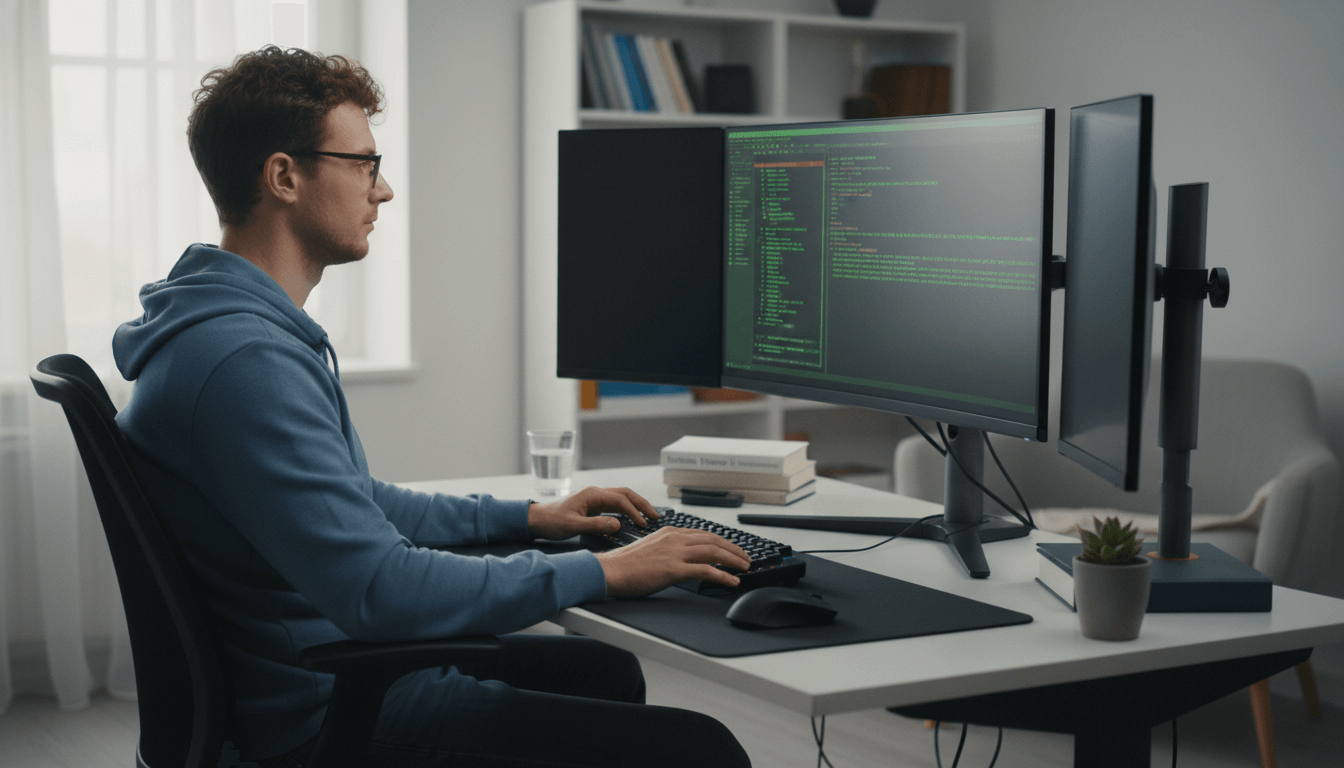
My previous monitor was positioned extremely low—I basically had to tilt my head down 45 degrees to see the code clearly. I didn’t think much of it at the time, until my neck started hurting so badly I couldn’t turn my head. When the doctor saw my work setup photo, his first words were, “Your monitor is way too low.”
What is the ideal height? When sitting upright, your line of sight should naturally fall on the top edge of the screen or slightly below it. You shouldn’t have to look up or down. The distance should be about an arm’s length, roughly 60 to 70 centimeters. This allows your head to remain in a relaxed position, reducing strain on your neck.
I propped up my monitor with a few technical books—heavy tomes like “Deep Understanding of Computer Systems” and “Introduction to Algorithms” finally came in handy. After a week, my neck felt noticeably less stiff. Later, I bought a monitor stand that lets me adjust the height anytime, which is way more convenient.
If you use multiple monitors, position the primary display squarely in the center and angle the secondary monitor slightly inward. I previously had my primary screen off-center, which forced me to tilt my neck to one side constantly. After six months, my right shoulder became noticeably higher.
Stretching Really Works
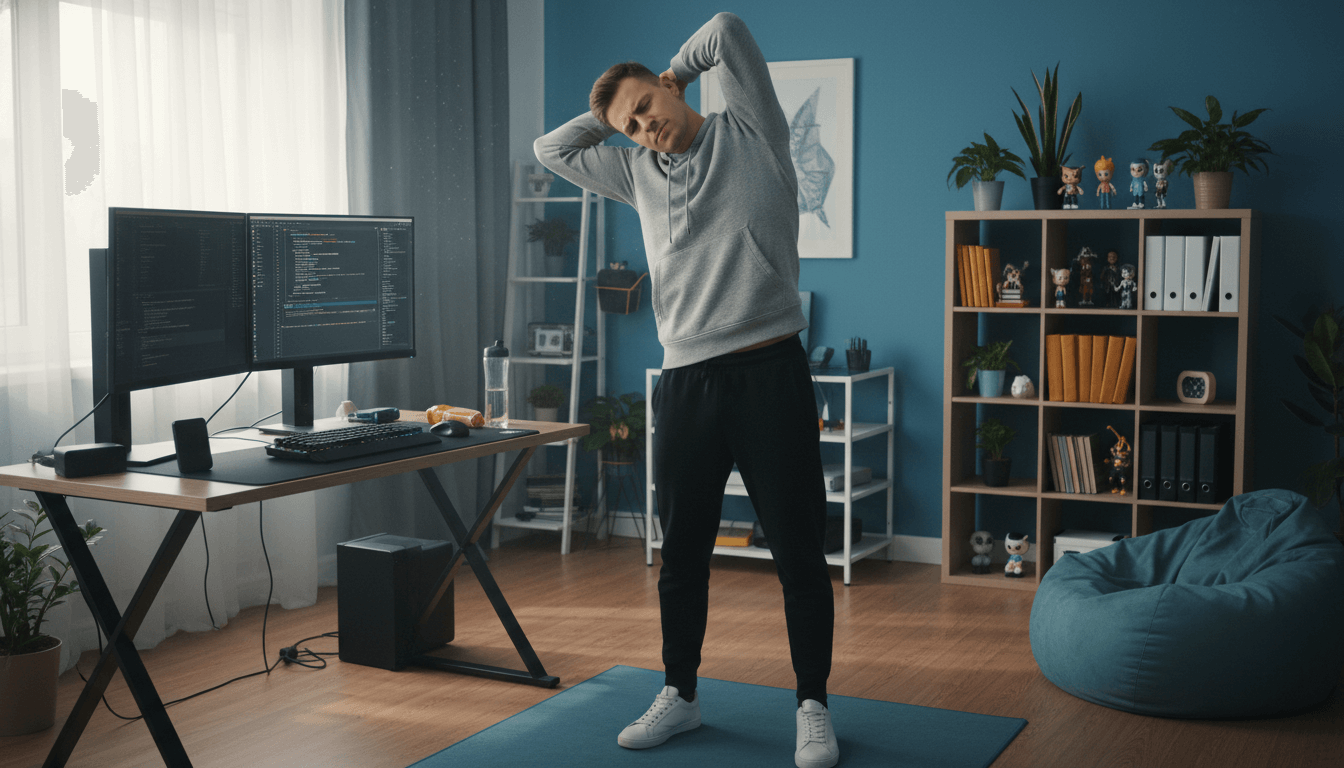
I used to think stretching was something only done in gyms and had nothing to do with a coder like me. Later, a physical therapist taught me a few exercises, and after trying them, I realized they really do work.
The simplest exercise is turning your head. Slowly turn your head to the right until you feel a slight stretch on the left side of your neck, then stop—don’t push too hard. Hold for 20 seconds, then switch sides. Repeat three times on each side. Keep your shoulders still; only move your head. When I first started doing this, my neck cracked loudly, which startled me, but it gradually improved over time.
Another exercise is shoulder rotations. Lift your shoulders, then rotate them backward in a circle—slowly, feeling your shoulder blades squeeze toward the middle. Do 10 repetitions, then rotate forward 10 times. When coding, shoulders tend to slump forward; this movement helps pull the muscles back into place.
The last one is the chest opener. Please stand up, clasp your hands behind your back with your arms straight, lift them slightly, and push your chest forward. You’ll feel a stretch across your chest and the front of your shoulders. Hold for 30 seconds, and repeat twice.
The physical therapist said to do it every hour. At first, I kept forgetting, so I set an alarm. Now it’s become a habit—after sitting for a while, I naturally remember to stretch. Each session only takes 2-3 minutes, but it really does help a lot.
The 20-20-20 Rule
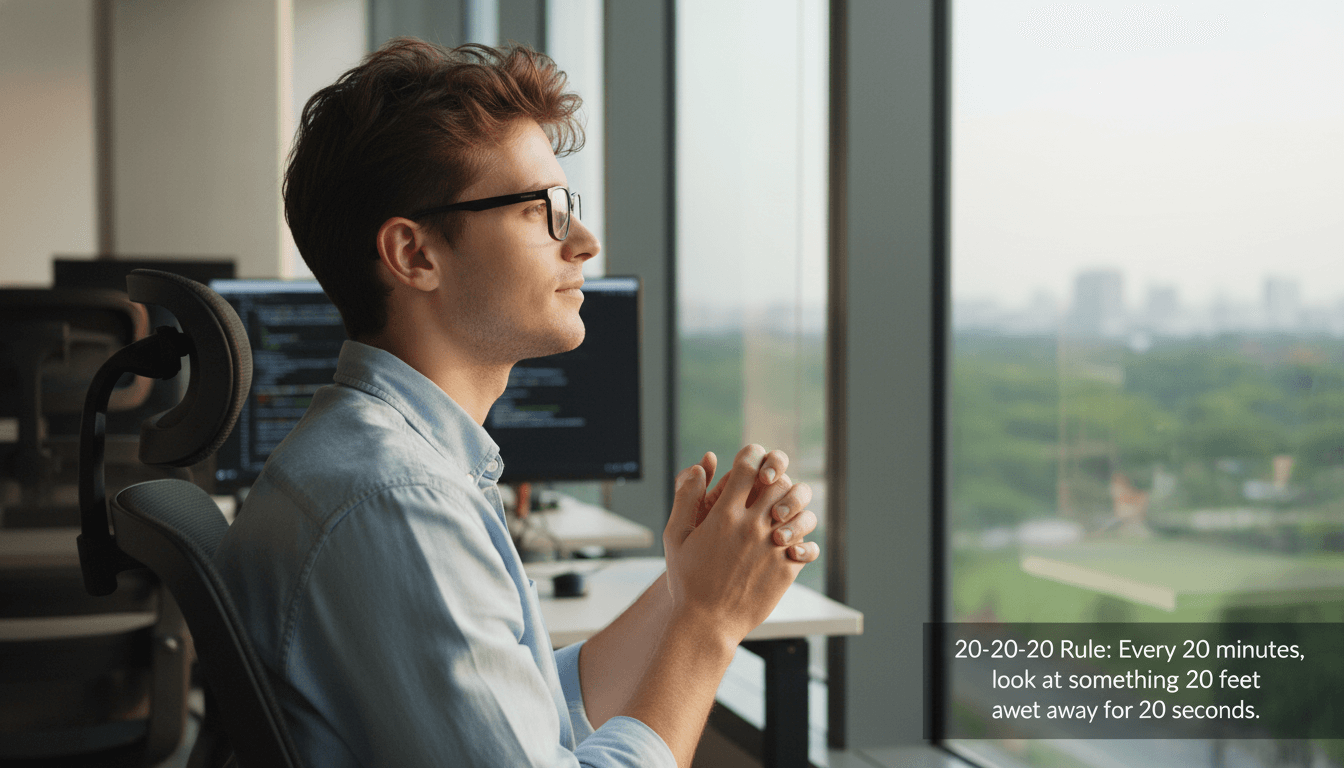
This rule is very simple: every 20 minutes, look at something 20 feet (about 6 meters) away for 20 seconds.
At first, I thought this was way too frequent—my work pace just couldn’t handle it. But later I realized it’s really just about giving your eyes and neck a break. Staring at a screen up close for long stretches keeps your eye muscles constantly contracting, while your neck gets locked in one position. When you look into the distance, your eyes refocus, and you’ll naturally lift your head and shift your body.
I’m currently using Stretchly, which automatically alerts me when it’s time. There’s a tree outside my office window, so I look at it. I use those 20 seconds to stand up, rotate my shoulders, and take three deep breaths.
At first, it felt like a real interruption to my train of thought, but after a week, I got used to it. Now, if I forget to do it, I actually feel dry eyes and neck discomfort. The most significant benefit of this habit is that it reminds you, “Hey, you’re slouching again.”
Core Muscles Need Training

The doctor told me that lower back pain is often caused by insufficient core strength, which puts too much pressure on the spine. I was skeptical at first, but after sticking with the exercises for a month, I did notice an improvement.
The plank is the most fundamental exercise. Lie face down on the floor, supporting yourself with your forearms, keeping your body in a straight line. At first, I could only hold it for 15 seconds, but now I can do it for a full minute. If it feels too difficult, you can kneel on the floor. The key is to avoid sagging your lower back or sticking your butt out.
The bird-dog exercise looks like a dog peeing (laugh). Get on all fours, then extend your right arm and left leg, holding the balance for 3 seconds before switching sides. Do 10 reps per side. This move looks simple but really tests your coordination—I was wobbling all over the place at first.
The dead bug exercise is performed lying on the floor. Raise both arms and legs, then slowly lower your right arm and left leg while keeping your back flat against the floor. You’ll feel a slight burn in your abs after completing this movement, which means you’re engaging the muscles effectively.
I usually do it before bed—just five minutes is enough, three times a week. At first, it might feel a bit monotonous, but after a month, I clearly noticed that my lower back didn’t feel as tired after sitting for long periods.
The Business of Sitting
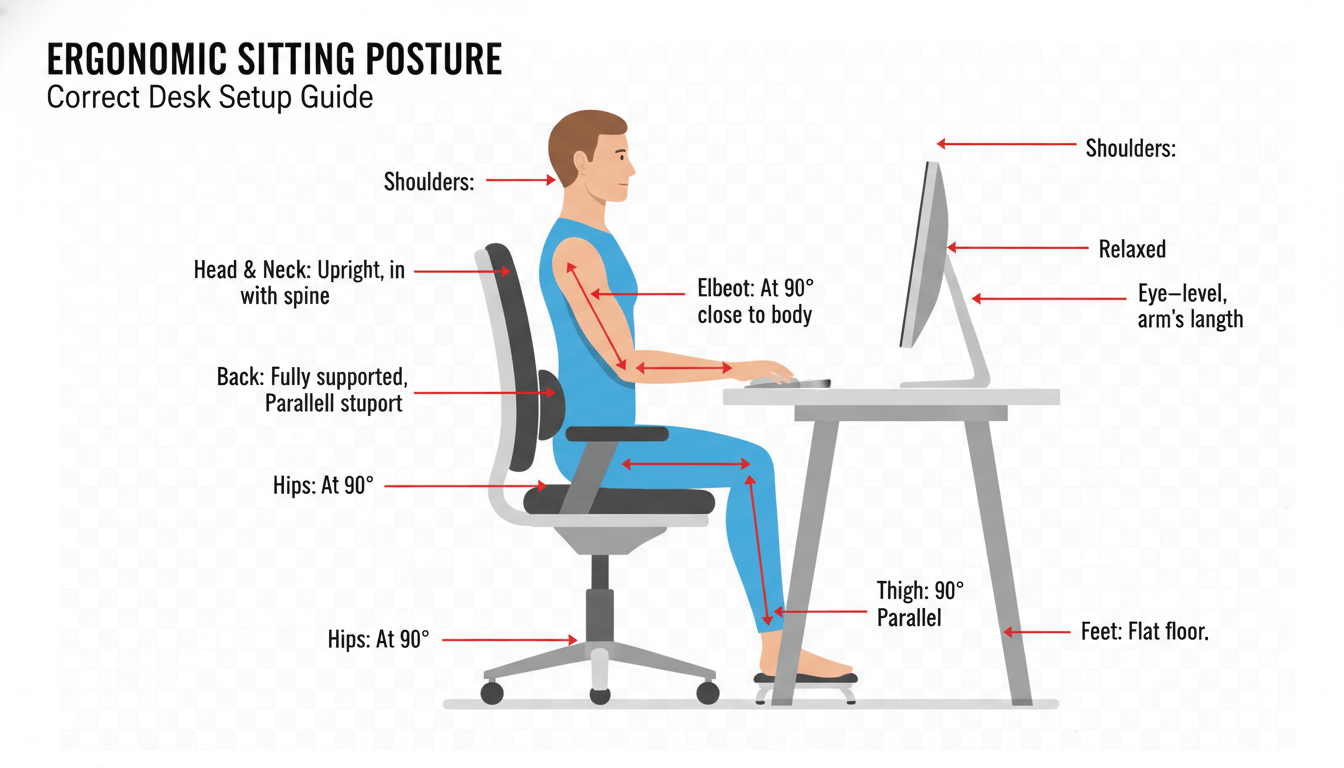
Good posture isn’t about sitting stiff as a board, like in military training; it’s about sitting without strain.
My current habit is feet flat on the floor, knees bent at roughly 90 degrees. Back against the chair, maintaining the natural curve of the lower back. Shoulders relaxed, not hunched. Head straight, ears aligned with shoulders, not thrust forward. Elbows also bent at 90 degrees, arms resting naturally on the desk.
It sounds like a lot to ask, but once you get into the habit, you won’t have to think about it. At first, I set hourly reminders to catch myself slouching. I even stuck a sticky note on my monitor: “Lift your head, relax your shoulders.”
My wife secretly recorded me working once, and even I was shocked when I saw it—I was practically glued to the screen. Sometimes I feel like I’m doing okay, but my posture has been all wrong for ages.
The first couple of weeks felt a bit tiring because I had to remind myself constantly. But sticking with it, it takes about three weeks to form a habit. Now, if I stay hunched over for too long, my body automatically reminds me: it’s time to sit up straight.
Long-Term Prevention: It’s All About Building Habits
To be honest, I’ve made my fair share of mistakes in this area. At first, I thought knowing the methods would be enough, but I soon realized the hardest part wasn’t “knowing”—it was “doing.” Later, I came to understand that prevention is fundamentally about gradually weaving small habits into your daily work routine.
How to Adjust the Workbench
I bought an ergonomic chair for over seven hundred bucks, but it didn’t do much good. Later, I realized the problem wasn’t the chair—it was that my entire workstation setup was all wrong.
I’ve already mentioned monitor height earlier, but here are a few more details: Your keyboard and mouse should be positioned at about elbow height, allowing your arms to hang naturally with your forearms mostly horizontal. My desk used to be too high, forcing me to hunch my shoulders while typing—no wonder my neck and shoulders were so sore.
Lighting is also crucial. I now have a desk lamp behind my monitor, which is much more comfortable than the overhead ceiling light. If you can afford it, a height-adjustable desk is definitely worth considering. Switching between standing and sitting positions significantly reduces pressure on your lower back. However, these things aren’t cheap—I only bought one after using it for half a year and seeing the benefits firsthand.
You don’t need to spend a fortune most of the time. I started by propping up my monitor with a few books—a 3-monitor stand works way better than a 300-chair. The key is to get the basics right first; don’t jump straight to buying the most expensive gear.
Daily Tasks
This part really took me the longest to develop into a habit.
I set an alarm to get up and walk around every two hours—otherwise I’d genuinely forget. Sometimes when I’m deep in coding, I’ll sit for three or four hours straight, and when I finally stand up, my back feels stiff as a board. Now whenever the alarm goes off, I get up to pour a glass of water or use the restroom, and I take the chance to stretch my neck and shoulders.
As for stretching, I now do those exercises we learned earlier at least three times a day: once when I arrive at the office in the morning, once after lunch, and again around three or four in the afternoon. Each session only takes two or three minutes, but it really works.
Another thing is finding relaxing activities. I go swimming twice a week now, and when I’m too lazy to move, I soak in a hot bath at home. It’s not some fancy wellness routine—just a way to unwind. When you’re stressed, your muscles tense up more, and I know this firsthand—during that project crunch time, my shoulders felt as stiff as rocks every single day.
Sleep is also crucial. I used to stay up late often, waking up the next day feeling stiff and sore all over. Now I try to go to bed before 11:30 p.m., and I feel entirely different when I wake up in the morning.
Strength Training Should Be Progressive
The plank and bird-dog exercises I mentioned earlier were really tough to hold for the first time. I couldn’t even manage 15 seconds on the plank before my whole body was shaking. But there was no way around it—the doctor said my core strength was insufficient, which meant my lumbar spine was bearing even more pressure.
My current routine is three sessions a week, each lasting about five minutes, done before bed. It was a bit tedious at first, but after a month, I could really feel the difference—my lower back doesn’t get as tired after long periods of sitting.
If you can’t stick with it on your own, consider hiring a coach or signing up for a yoga class. Having guidance helps you avoid many pitfalls, and having someone to hold you accountable makes it much easier to stay committed. A colleague of mine did just that, and it worked out really well for her.
Recording and Adjustment
At first, I thought this was unnecessary, but later I found it quite helpful.
Take a photo of yourself every month to see if your posture has improved. I’ve been doing this for three months now, and comparing it to my previous images, my shoulders aren’t hunched forward as much. Also, keep track of your pain levels by rating them weekly to see if there’s any improvement.
The workstation setup isn’t set in stone either. I’ve found that after improving my posture, I also need to adjust the monitor height accordingly—otherwise, it just doesn’t feel right again.
Improvement is a gradual process; don’t expect immediate results in just a week or two. Most people start noticing changes after about a month, but a fundamental transformation may take 3 to 6 months. Sometimes progress feels slow or even pointless, but if you stick with it, your body will respond.
If you’ve stuck with it for two months with slight improvement, don’t push through—see a doctor or physical therapist. Professionals can pinpoint precisely what’s wrong, which is far more reliable than guessing on your own. I put it off for ages before finally getting help, and looking back, I really should have gone sooner.
When to See a Doctor

I kept putting it off, thinking I could just tough it out. Then one morning, I woke up with such bad back pain I couldn’t even put on my socks. That’s when I finally went to the hospital. Looking back, if I’d gone sooner, I could have spared myself a lot of suffering.
Most of the time, self-adjustment really is enough to get better, but some signs really shouldn’t be ignored:
- It’s been two weeks of pain with no sign of improvement.
- The pain begins to spread to the arm, palm, or fingers.
- Frequent numbness or tingling sensations that do not resolve on their own
- Dizziness, or blurred vision
- Pain so severe that it affects work or prevents you from sleeping well at night
- Even though I’m stretching and adjusting my posture, the pain keeps getting worse.
Back then, my right leg was constantly numb, and my buttocks ached. I had to stand up after sitting for just a little while. At first, I thought resting would fix it, but after dragging it out for over a month, the numbness in my leg only got worse. I went to the hospital for an X-ray, and the doctor said it was a herniated disc in my lumbar spine, pressing on the nerves.
A physical therapist can pinpoint which movements are problematic and design a targeted training plan for you. The one I saw was comprehensive—after having me do several exercises, they immediately identified my weak core and the excessive pressure on my lumbar spine. If you can’t figure out what’s wrong yourself, seeing a physical therapist is far more reliable than just guessing.
A general practitioner can help rule out other conditions and arrange imaging tests if needed. When I heard I needed an MRI, I was pretty nervous, worried they might find something serious. But the doctor said most cervical and lumbar spine issues can be treated, and early intervention is much better than letting it become chronic. After the scan, I actually felt more at ease—at least I knew exactly what was going on.
Seeing a doctor isn’t embarrassing—really. When your code has a bug, you look up documentation and ask colleagues, right? Your body is no different—seek out professionals when needed. Plus, physical therapists can teach you long-term prevention methods that are far more effective than piecing together random tips you find online.
If you’ve tried for weeks with no improvement, don’t push through it—make an appointment with a doctor right away. Seriously, your future self will thank your present self. Every time I think about how long I put it off, I can’t believe how foolish I was back then.
Frequently Asked Questions
Q: How long will it take to feel better?
A: Honestly, it varies from person to person. In my own experience, adjusting my monitor height and chair made my neck feel more relaxed that same day. But to truly feel “better,” it took about a month of consistent effort. The first two weeks were mainly about easing the pain, while the rest gradually focused on building muscle strength and breaking bad habits. One colleague recovered faster than I did—they felt much better after just two weeks. Others took three months to see noticeable improvement. Don’t rush it. Keep track of how you think each week, and you’ll realize you’re making steady progress all along.
Q: Can these exercises be done while working?
A: Absolutely. I now stand up and stretch for 2-3 minutes every hour, and my colleagues have gotten used to it. Sometimes when I hit a coding block, standing up and moving around actually clears my head. Checking my posture is even simpler—just a few seconds. I can even think through problems while walking. You’re not wasting time; you’re protecting your ability to keep working.
Q: Will this pain ever go away?
A: If you can stick with good habits, it’s possible. But I won’t lie—once you start sitting around again and reverting to old bad posture, the pain will definitely come back. There was a time when I felt better and let my guard down, only to start hurting again soon after. Later, I made these stretches and adjustments as routine as brushing my teeth, and I haven’t had a flare-up since. Prevention is always easier than a cure.
Q: What app or tool do I need?
A: The built-in timer on your phone is perfectly adequate. If you’re looking for something more professional, try Stretchly (for rest reminders) or Fitbod (for workouts). Some apps monitor sitting posture, but they aren’t necessary. Start simple—only add tools if you genuinely need them. Tools are just aids; the real key is your own consistency.
Q: Should I buy an expensive ergonomic chair?
A: Hold off on buying just yet. I made an impulse purchase myself—spent over two thousand on a chair, only to find it wasn’t as effective as I’d hoped. Start by adjusting your current chair: add a lumbar support cushion and tweak the seat height. Many people solve their issues just by doing these things. If you still feel uncomfortable after two or three months of trying, then it’s time to consider investing in a new one. Before buying, read plenty of reviews—don’t make the same mistake I did and pay for your own stupidity.
Things to Try This Week

You might want to tackle all your problems at once, but honestly, that approach makes it easier to give up. I tried to be too perfect back then and ended up quitting after just three days. Later, I switched to focusing on one or two things at a time, and that’s how I gradually got everything done.
Start with these:
Elevate your monitor to eye level. I used several technical books as references—Introduction to Algorithms and Deep Understanding of Computer Systems finally came in handy. After three days, my neck felt noticeably more relaxed.
Set a timer to remind yourself to stand up. I use the built-in timer on my phone, which goes off every hour. I kept forgetting at first but gradually got used to it. Stand up, walk around a bit, and grab a glass of water—it gives your eyes a break too.
Try those stretching exercises. You don’t have to do every single one—pick one or two that feel most comfortable. I started with just turning my head and shrugging my shoulders. After a week, I thought they were helpful, so I added the other movements.
Take a look at your posture when sitting. I’ve noticed I often slouch without realizing it or lean to one side. Now, when I’m coding, I occasionally remind myself to sit up straighter.
If you want to add some exercise, try the plank. I could only hold it for 20 seconds at first, but now I can hold it for a full minute. Don’t compare yourself to others—focus on making steady progress.
More can be added later:
In a week or two, you can check if your symptoms have improved. If the pain persists or worsens, you really should see a doctor. I waited too long, and it ended up being more complicated to treat later.
Make stretching a habit. I now stretch once every morning when I wake up and again during my lunch break. It doesn’t take long—just five minutes is enough.
Start with whatever you can manage and gradually increase the intensity. Don’t push yourself too hard at first. My colleague, who works on the backend, started with just 10 seconds of planking and can now do all kinds of core exercises.
Check your work environment monthly. Is your chair at the right height? Is your monitor properly aligned? Sometimes you unconsciously revert to old habits, so it’s best to make adjustments regularly.
Start with one task today. Tackle another tomorrow. No need to rush—taking it slow makes it easier to stick with it. Your neck and back will thank you.
Final Thoughts

As I write this, my right side is starting to ache again. It could be from sitting too long today or from doing too many plank exercises yesterday. But compared to how it used to hurt so badly that I couldn’t stand up, this discomfort is really nothing.
I’m no health expert—just an ordinary programmer like you, staring at screens and writing code every day. But I’ve learned the hard way how much trouble these issues can cause if left unaddressed. So I want to share my experience, hoping you can avoid some of the pitfalls I fell into.
The methods described in this article are ones I’ve personally tried and found effective. However, everyone’s situation is different, so your results may vary. If specific exercises feel comfortable, do them more often; if others feel uncomfortable, set them aside for now and don’t force yourself.
Most importantly, please don’t wait until the pain becomes unbearable before taking it seriously. I used to think I was young enough to tough it out, but the longer I ignored it, the worse it got. Looking back now, if I had adjusted my workstation and stretched earlier, I might never have developed a herniated disc in the first place.
If you’re already experiencing severe neck or back pain, or numbness in your hands or feet, don’t put it off any longer—see a doctor. The methods I’ve outlined here are for prevention and relief only and cannot replace professional treatment.
Alright, that’s it. Hope this helps. If you have any questions or see any results after trying it out, feel free to share in the comments section. Let’s exchange ideas—you might find a method that works better for you.
Take care of yourself. No matter how well you write code, it’s useless if your health fails.

Good day! Would you mind if I share your blog with my myspace group?
There’s a lot of folks that I think would really appreciate your content.
Please let me know. Thank you
Your style is really unique compared to other people I have read stuff from.
Many thanks for posting when you’ve got the opportunity, Guess I will just bookmark this blog.
I know this if off topic but I’m looking into starting
my own blog and was wondering what all is required to get setup?
I’m assuming having a blog like yours would cost a pretty penny?
I’m not very internet savvy so I’m not 100% certain. Any suggestions or advice would be greatly appreciated.
Cheers